
How a fulfillment center actually runs
From the store side an order looks simple. Someone clicks buy and a box shows up. Between those two moments sit seven handoffs, and every one of them is a place an order can stall. Here is what happens inside a well-run fulfillment center, and what to ask about each step before you trust anyone with yours.
1. The order arrives, and gets checked
Orders reach the warehouse through an integration with your store. Done properly, that integration is event-driven: the order lands moments after checkout, not in a batch file somebody imports the next morning. (If you've ever wondered why two “connected” systems still disagree, we wrote about integrations that look connected but are not.)
The first thing a good system does with a new order is not pick it. It validates it. Is every SKU known? Does every item have a weight and dimensions? Is the address deliverable? Is there stock to reserve?
An order that fails one of those checks should stop loudly, in an exceptions queue that a person owns, rather than move forward on a guess. We learned the expensive version of that lesson with a SKU that came in without a weight. Weight is now a mandatory field before anything is received into stock, and the system enforces it so nobody has to remember.
2. Inventory is reserved
Once an order is valid, its units are reserved against available stock so two orders can't claim the same last unit. This is the moment inventory accuracy stops being a back-office metric and becomes a customer-experience one. A count that is off by three means three customers get an apology instead of a package, which is why we argue that inventory accuracy is a revenue problem.
3. Picking is planned, then verified
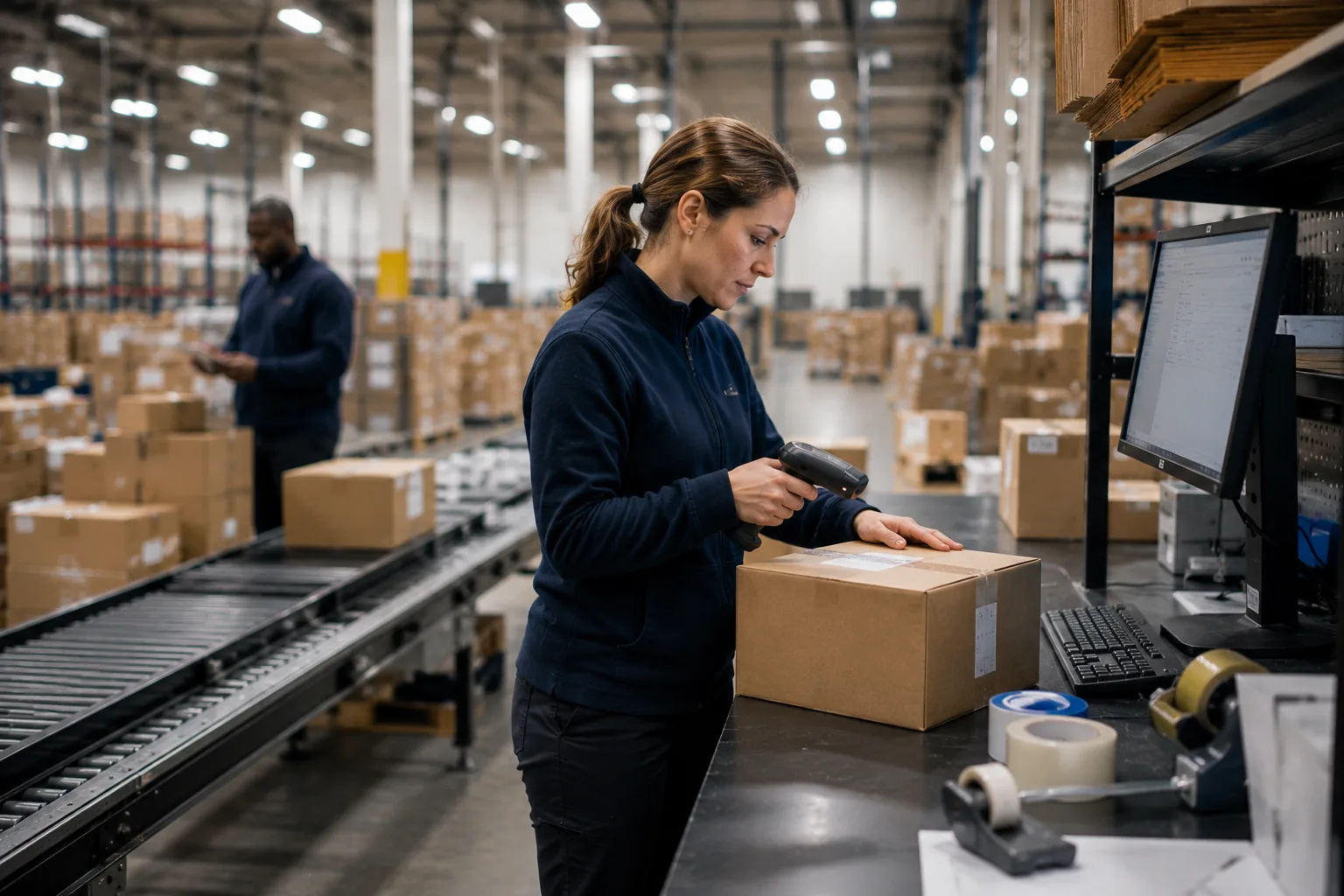
Pickers don't walk the building one order at a time. Orders are grouped into pick runs by location, service level, and carrier cutoff, so one person walks one efficient path and fills several orders on it. The planning is software. The verification is a scan.
Barcode-verified workflows help us maintain high order accuracy, and when a verified Argo error occurs, we make it right: we re-ship the correct item at our cost or credit your Argo fees. Read the policy in plain English, or the governing terms in Section 4.5.
4. Packing is a pricing decision
The box gets chosen at the pack station, and box choice drives dimensional weight. Right-sized, dim-weight-aware packing is one of the few levers that lowers what a shipment costs without touching a carrier contract. A box two inches too tall on every order is a tax you pay thousands of times a month.
Packing is also where your brand shows up. Inserts, thank-you cards, samples, and branded packaging go in here, to your specification. Done well, that turns a cardboard box into something a customer remembers, which is the argument we make in print inside the parcel.
5. The label is rate-shopped
The label that prints comes from real-time rate shopping across carriers, weighing cost, transit time, and reliability against the delivery promise your customer chose at checkout. The rules behind that choice are worth more than the comparison itself, which is the whole point of rate shopping is a policy, not a feature. Tracking flows back to your store and on to your customer automatically.
6. The handoff to the carrier
Carriers pick up at our warehouse locations every business day. For you, the number that matters is the cutoff: the time after which an order ships on the next business day instead of this one. Ask any 3PL what its cutoff is, whether it differs by carrier, and what happens to an order that lands five minutes after it. Specific answers are a good sign.
7. Reporting back
Every shipment's service, charge, and tracking shows up in your Partner Portal, along with your inventory and its transaction history. A fulfillment operation you can only see through a month-end report is one you are trusting rather than managing. We would rather be managed.
The pattern across all seven steps: software does the planning, a scan or a rule does the checking, and a person owns anything the system can't decide. When one of those three is missing, that's where orders stall.
What separates a good floor from a busy one
Busy warehouses all look alike from the mezzanine. The differences show up in three places.
- Exceptions are surfaced, not absorbed. Our Exception Reports surface problems before you feel them, so we manage issues proactively instead of explaining them afterward. That is what we mean by Excellence, one of our three core values.
- Surges are planned for. A floor that runs fine at a normal volume can fall apart at three times that volume. Recovery is designed in advance or it doesn't happen, which is why we treat peak season as a capacity problem.
- The process changes. Every Argo employee submits improvement recommendations every week. Most are small. The ones that move a partner's numbers get shipped. We call that Evolution: standing still is losing ground.
Why this matters to a growing brand
Our mission is to change our partners' lives by owning everything after the order. In practice that means the seven steps above stop being your problem. You build the product, sell it, and market it. Everything after the buy button is ours, including the parts that go wrong.
That last clause is the real test of any fulfillment partner. Anyone can ship the easy orders. What you are buying is how the hard ones get handled.
The bottom line
A fulfillment center is a chain of handoffs: validate, reserve, pick, pack, rate, hand off, report. Each one can be planned by software, checked by a scan, and owned by a person. When you evaluate a 3PL, walk the chain with them and ask who owns each link.
Walk the chain with us
Book a 30-minute call and we'll trace one of your real orders through our floor, step by step, including what happens when something goes wrong. Bring your current provider's process and we'll compare notes honestly.
Request a fulfillment review