
Kitting is a manufacturing step. Run it like one.
A kit looks like packing with extra steps. It is closer to light manufacturing: a bill of materials, component inventory, assembly, and quality control, and each of those can go wrong on its own. Brands that treat kitting as a packing task end up with kits they cannot build and components they cannot sell.
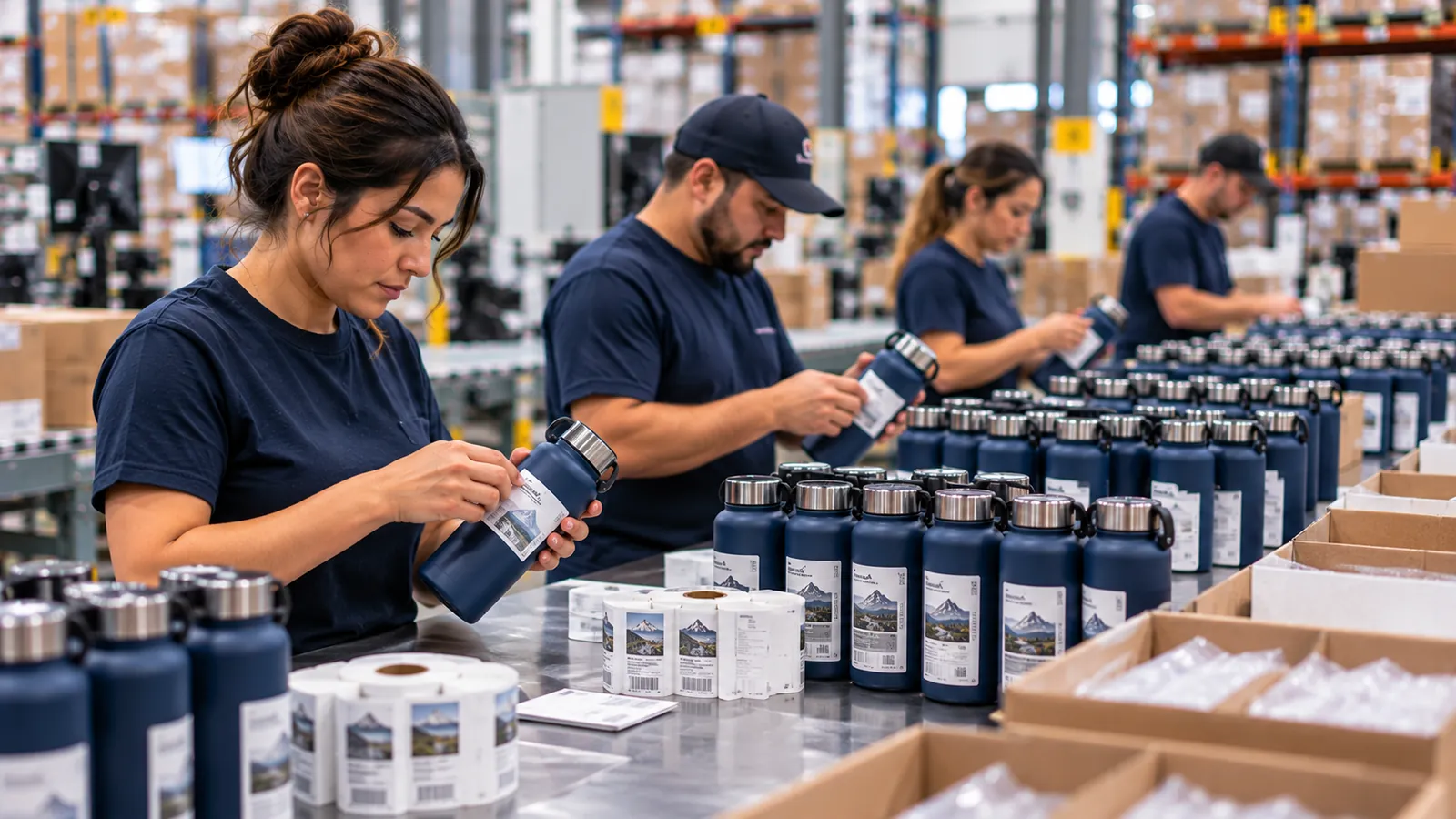
What counts as a kit
More than most brands think. A kit is any sellable item built from other items in fixed quantities:
- Bundles: two or three SKUs sold together at one price.
- Gift sets and holiday boxes: often seasonal, often with their own packaging.
- Subscription boxes: a different mix every cycle, sometimes a different mix per plan.
- Sample and trial packs: small quantities of several products, usually with printed material.
- PR and influencer mailers: low volume, high stakes, almost always personalized.
- Retail-ready assemblies: product, insert, and packaging built to a retailer's spec.
Every one of these is a parent SKU made of child SKUs. That sounds like a technicality. It is the whole game.
The bill of materials is the whole game
In ArgoWMS, our warehouse management system, a kit is a parent item with its child components and the quantity of each one recorded against it. That record is what makes everything downstream work. When kit availability follows the components, a short component shows up as a short kit, and a receipt of components changes what you can sell. Nobody has to reconcile two numbers that were never supposed to be separate.
Without that structure, kit availability gets tracked as its own count, usually in a spreadsheet, and it drifts. The kit count says 400 while the shelf holds enough lids for 260.
The most common kitting failure is not assembly. It is a component that runs out while nobody is watching, because kit availability was tracked as its own number instead of being derived from its parts.
Build ahead, or build on demand
There are two ways to run kitting, and most brands of any size end up using both.
Pre-kitting (building to stock) means assembling a batch of finished kits ahead of demand. Those kits then ship as fast as any single SKU, because the assembly already happened. The risk is that components get locked inside kits that don't sell. It suits stable, high-volume kits and gift sets with a known season.
Kitting on demand means components stay loose on the shelf and each kit is assembled when its order arrives. It's flexible: a new variant costs nothing to introduce and nothing is stranded if a bundle flops. The trade is a slower pack and more touches per order. It suits catalogs with many variants, personalization, or modest volume.
The right mix depends on two numbers: how fast each kit sells and how many variants you run. A best-selling bundle with one configuration should almost certainly be built ahead. A twelve-variant gift program probably shouldn't be.
Subscription boxes are kitting with a calendar
Subscriptions add a deadline to everything above. Renewals cluster on predictable dates, each plan may carry a different mix, and customers swap items. The build has to be planned backward from the ship date: when the cohort renews, when the kits need to be assembled, and therefore when every component needs to be on the shelf.
The weak link is almost always inbound timing. Inbound inventory is typically received within two business days of arriving at our dock, so a component that lands the day before a build is a scheduling risk you can see coming. Plan the component delivery as carefully as the ship date, and leave room for the supplier who ships late.
On the outbound side, renewals that land together can be batched against a carrier cutoff so a whole cohort leaves on the same pickup. That's one of the shipping rules our engineers write per partner.
Quality control is where kits are won
A mis-built kit is worse than a mis-picked order, because it's usually wrong in a way the customer notices on opening. Three controls do most of the work:
- A first-article approval. Build one kit, photograph it, and get it approved before the batch starts. It costs an hour and catches the wrong insert before it goes into five hundred boxes.
- Written build instructions. Component order, orientation, and what “done” looks like, kept with the kit record rather than in someone's head.
- Scans on components. The same barcode discipline that verifies a pick verifies what goes into the kit.
Our kitting service covers design consultation, kit assembly, and quality control, with personalized items, inserts, and custom touches as specified in your Sales Order. The details live on our inventory services page.
Print belongs in the kit
Most kits carry something printed: an insert card, a booklet, a label, a sleeve. When printing and fulfillment happen under one roof, those pieces can be sized to the kit, timed to the build, and printed in the quantity the build actually needs. They can also be versioned per cohort or personalized per recipient with variable data printing.
When print comes from a separate vendor, the insert becomes another component with another lead time, and it is usually the one that arrives last. We wrote more about the coordination problem in print and fulfillment under one roof.
What to ask any 3PL about kitting
- How is a kit represented in your system, and is availability derived from the components?
- Who writes the build instructions, and is there a first-article approval before a batch?
- What happens when a component runs short in the middle of a build?
- Can you build some kits ahead and others on demand, for the same brand?
- Can you print the inserts, or do they come from another vendor on another schedule?
Why we take kitting seriously
Kits are where your brand meets your customer most directly. They are also where operations get complicated fastest, which makes them a good test of whether a provider can adapt to you or only to its template. Custom kitting logic is one of the things our engineers build per partner, alongside routing rules and cart integrations. It is part of what we mean by owning everything after the order.
The bottom line
Treat a kit as a product with a bill of materials, not a packing instruction. Derive availability from components, choose deliberately between building ahead and building on demand, plan subscriptions backward from the ship date, and put a first-article approval in front of every batch. Do those four things and most kitting problems don't get a chance to start.
Bring us your kit list
Send us the kits you sell today and the ones you'd like to launch. On a 30-minute call we'll talk through which should be built ahead, which on demand, and what the inserts would look like printed in the same building.
Schedule a discovery call