
We retired our legacy systems. Here is what replaced them.
This week we retired the legacy platforms that ran our sales pipeline, quoting, and print production, and moved that work onto an internal management system our own engineers built. It was a large project and a deliberate one. It also says a good deal about the kind of company we intend to be.
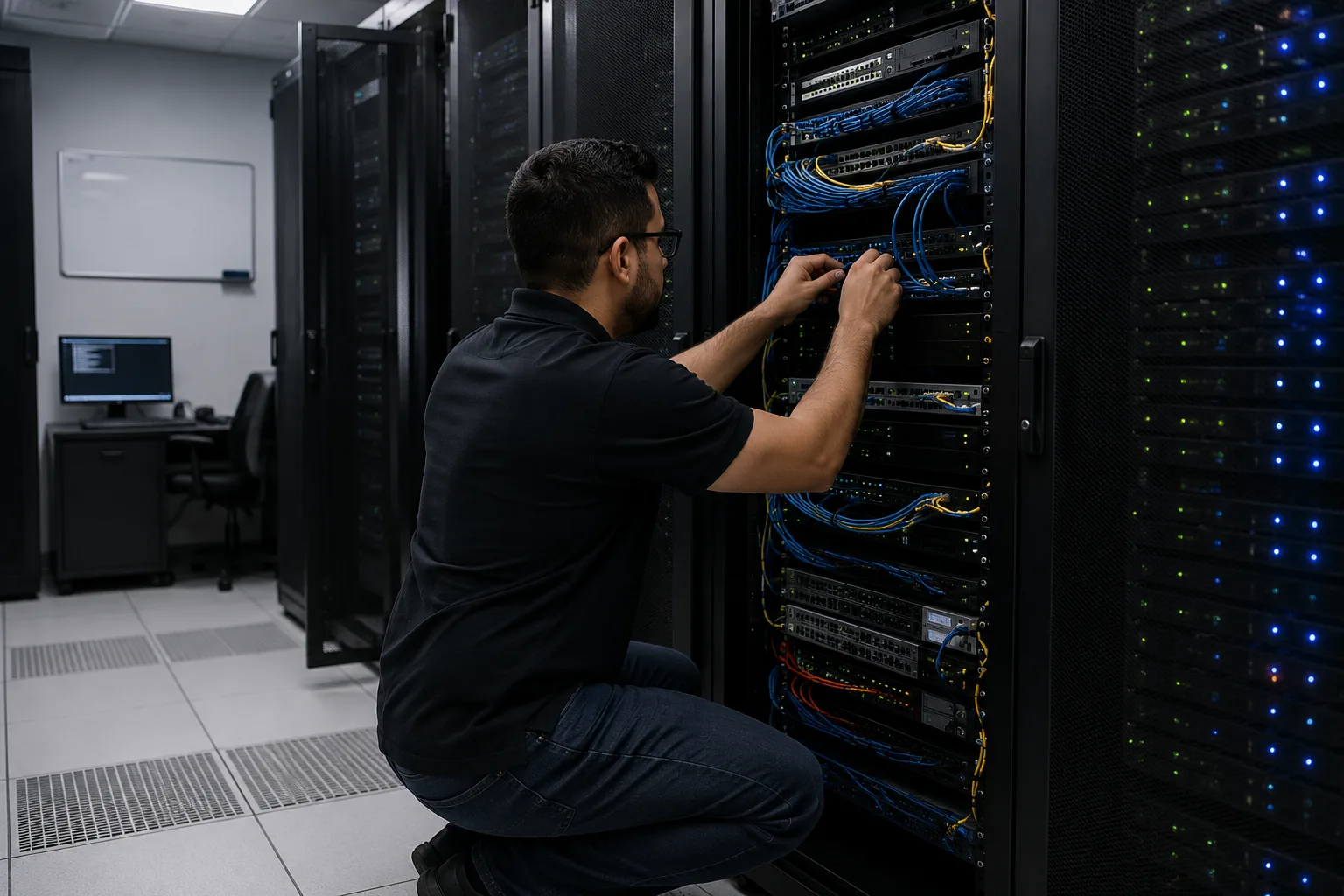
What we were running before
Like most companies our size, we grew up on rented software. A sales platform tracked customers and deals. An older manufacturing system ran print jobs. Spreadsheets filled the gaps between them. Each tool was reasonable on its own, and each made sense when we adopted it.
Together they created the problems every growing company recognizes. The same customer existed in several systems, spelled slightly differently in each. A quote had to be retyped to become a job. A simple question like “where does this project stand?” had a different answer depending on who you asked and which screen they had open. And every improvement we wanted had to wait for a vendor who had thousands of other customers and no particular reason to prioritize ours.
What replaced it
Our own engineers built an internal management system that now runs the business side of Argo from first conversation to final invoice. It sits alongside ArgoWMS, the warehouse management system we also built, and the two are designed to work together. In practice, that one system now handles:
- Accounts and relationships: companies, contacts, and the full history of how we work with each one.
- Sales and quoting: opportunities, quotes, and the pricing rules behind them, in one place.
- Print estimating: automatic layout of each job on the press sheet, and automatic ganging of compatible jobs so they share a press run. The savings show up on the quote as a line, not a lecture about sheet geometry.
- Projects and production: when a deal is won, its project and tasks are set up automatically instead of retyped from the quote.
- The handoff to fulfillment: product headed into our warehouse is confirmed against ArgoWMS, so the business side and the warehouse agree on what arrived.
- Billing and purchasing: invoices, recurring agreements, and purchase orders tied to the same records as everything else.
The whole application is also available in Spanish, so the people who use it every day can work in the language they prefer. It's a small detail, and it tells you who the system was built for.
Why this matters to a partner: when sales, production, billing, and the warehouse share one source of truth, the details you give us once stay given. Nobody retypes your project from an email, and your Partner Success Rep and our floor team are looking at the same facts.
Owning the roadmap
The biggest change isn't any single feature. It's who decides what gets built next.
With rented software, our priorities were a feature request in somebody else's queue. Now they're our own, and they're set by what our partners and our teams need. When a partner's workflow needs something new, the conversation is about how to build it, not whether a vendor might get to it in a future release. Our engineers ship changes to these systems most weeks, many of them small, and many of them traced straight back to a request from the floor or from a partner.
That's the value we call Execution in its most literal form. Ideas are worth nothing until they ship, and now we can ship them.
Owning the data
The second change is quieter and just as important. Your account's information now lives in systems we designed, in a structure we chose, under rules we control. We decide how it's organized, how long it's kept, and who on our team can see each part of it. Nobody's export limits stand between us and an answer to your question.
Owning the data also means owning the responsibility for protecting it. We designed for that from the start:
- Separation at the database level. Each tenant's records are isolated by rules enforced in the database itself, not only in application code.
- Role-based permissions. People see what their job requires and nothing beyond it. Sensitive areas carry stricter access than everyday ones.
- Secrets kept out of the code. Credentials and keys live in a dedicated, access-controlled vault, scoped to the account they belong to.
- A record of changes. Sensitive changes are logged with who made them and when.
- Standard protections throughout, including encryption in transit and multi-factor authentication for sensitive access, as our Privacy Policy describes.
Failing loud, by design
One design rule runs through the whole system, and it's the one we'd point to first. When the software can't decide something with confidence, it stops and asks a person. A quote line the system can't price goes to review instead of becoming a silent zero. A record that won't match gets flagged for repair instead of dropped. We think that's the single most important property of any business system, and it's much easier to hold to when you write the code yourself.
What makes this unusual
Most 3PLs and print shops rent nearly all of their software: a warehouse system from one vendor, a sales platform from another, an estimating tool from a third. That works, and it puts a ceiling on how far a provider can adapt to you. Very few employ their own engineering team, and fewer still build the systems that run the business side as well as the warehouse.
We do, because Argo is a technology company that lives in logistics and print. We said in why your 3PL should write its own software that the real test is whether the people running your operation can change it when your business needs something different. Retiring our legacy systems is us applying that test to ourselves.
The honest part
Building your own systems is a real commitment, and it goes wrong in predictable ways: half-finished features, software only its authors understand, effort spent on problems a vendor already solved. We moved deliberately, carried our history forward instead of starting from a blank slate, and kept specialist tools where a specialist does the job well. The guardrail is the one we hold every project to: a project we start is a project we finish.
The bottom line
We replaced the rented platforms behind our sales, quoting, and print production with systems we built and control. For partners, that means one source of truth, faster changes, better protection of your information, and a roadmap shaped by what you actually need. It's one more piece of owning everything after the order.
See the systems, not the slide
Book a 30-minute call and we'll show you the real screens behind your account, from quote to warehouse, along with an honest account of what we've built and what's still on the roadmap.
Schedule a discovery call